Rangers, campground hosts and trail friends use words like vestibule, bear box and grey water as if everyone learned them at summer camp. Here is what each term actually means for how you pick a spot and set up camp.
Every hobby has its shorthand, and camping is no exception. Park rangers, campground hosts and the folks at the next site over will talk about vestibules, bear boxes and grey water as if the whole country learned these words in fourth grade. This glossary covers the terms you will actually hear when you pick a spot and set up camp, with what each one means for how you camp.
Why Campground and Trail Talk Sounds Like a Different Language
These words carry real information. A campground with bear boxes changes where your food sleeps tonight. A trail description that says there are no outhouses means you need a cathole plan before you leave home. Knowing the vocabulary is the fastest way to follow the rules and feel like a regular.
Most terms fall into four groups: your tent, your site, your kitchen and your bathroom. We will take them in that order, then cover the two knots that hold it all together. For help picking the spot itself, see our guide to choosing and setting up a campsite.
Tent Terms: Fly, Vestibule, Guy Lines and Footprint
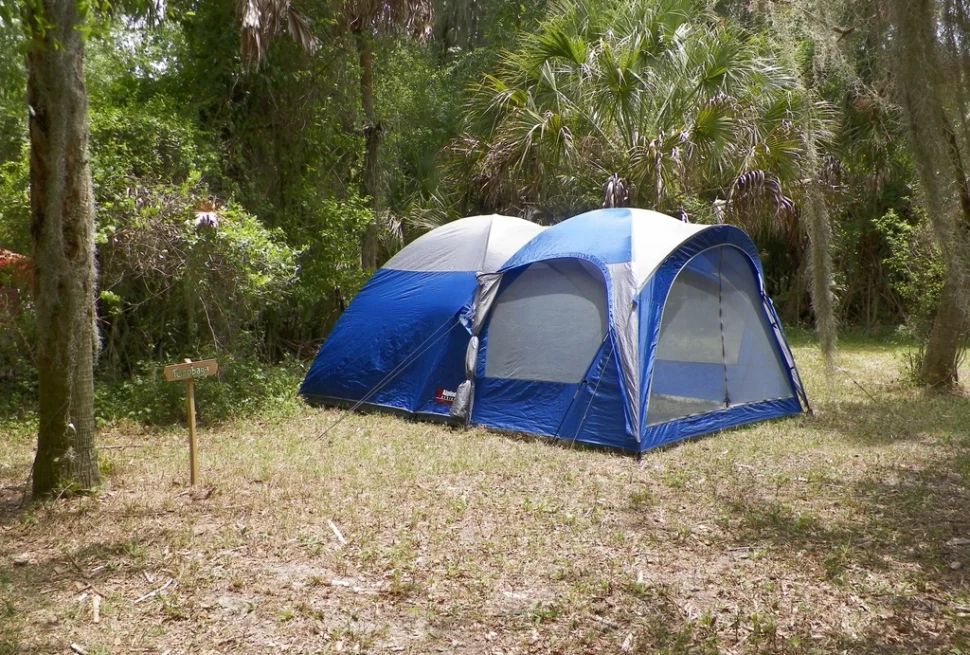
Rainfly: the waterproof cover that stretches over your tent body. It keeps rain and dew off the mesh; without it, most tents leak in any shower.
Vestibule: the covered outside area created where the rainfly extends past the tent body. It is the mudroom for boots, packs and wet raincoats you do not want dripping inside.
Footprint: a waterproof sheet placed on the ground under a tent to protect the floor from dampness and wear. Some tents have matching footprints; a tarp cut to size works too, as long as no edges stick out past the floor to collect rain.
Guy line: a cord running from the tent or rainfly to a stake, holding the structure taut. Most tents come with them loosely stowed in a pocket; stake them out before a windy night, not during one.
Tent stake (peg): the pin or hook driven into the ground to secure a stake loop or guy line. Carry a few spares, because they bend and disappear.
Pitch: simply to set the tent up. “Pitching camp” refers to the whole job, not just the tent.
Site Terms: Bear Boxes, Fire Rings and Dispersed Camping
Dispersed camping: camping outside a developed campground, usually on national forest or BLM land. There are no water, restrooms or trash cans, so you must be self-contained and pack out everything, including leftover food and litter. Rules vary by forest and district.
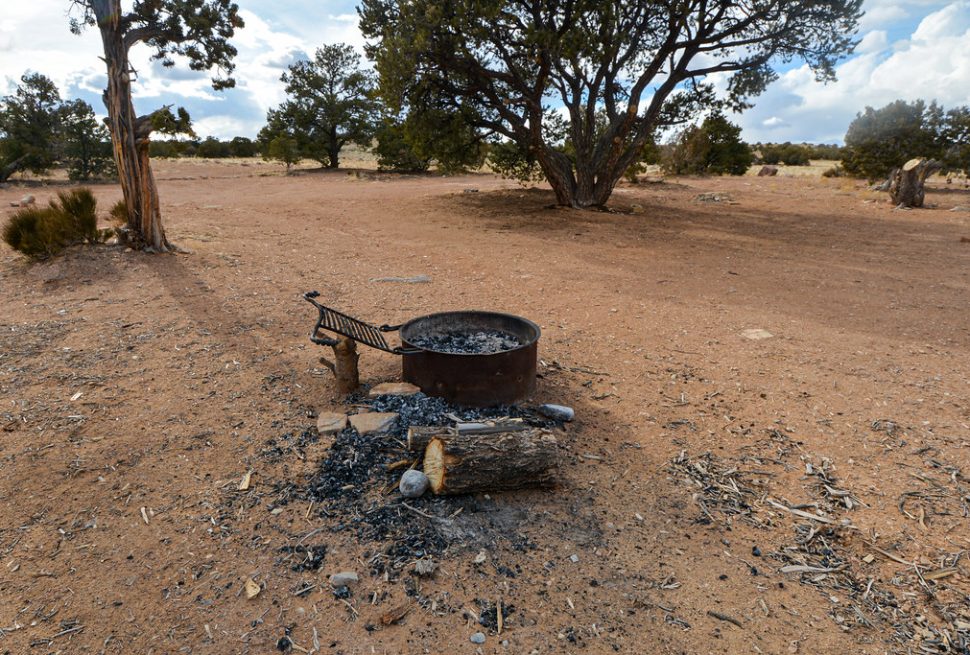
Fire ring: an established ring of metal or stone where fires are built. In most developed campgrounds, fires belong in the ring and nowhere else, and building a new ring beside it is off the menu.
Bear box: a metal locker at the campsite for food, trash and anything scented, from toothpaste to sunscreen. A cooler with the latch closed is not a substitute.
Bear pole: a tall pole with arms near the top for hanging food bags where no locker exists, such as the tent-platform campgrounds on the Chilkoot Trail in Alaska.
Bear hang: the act of suspending your food bag from that pole or a branch, out of reach of bears and rodents. Placement and setup matter, so see our guide to food storage in bear country.
Kitchen and Water Terms: Grey Water, Splashback and Sumps
Potable and non-potable: whether water is treated and safe to drink as-is. Signs at campgrounds matter. The Taiya River, for example, runs clear past a backcountry campground but is listed as non-potable and must be filtered before drinking because of sediment and possible contamination. Our guide to making stream and lake water safe to drink covers the methods.
Grey water: the used water from washing yourself or your dishes, as opposed to toilet waste. Even biodegradable soap carries chemicals and oils that can affect soil and the plants that grow in it, which is why grey water never goes straight into a stream or lake.
Strained dishwater: what grey water becomes after you remove food bits with a small screen. Carry wash water at least 200 feet from streams and lakes, then scatter it broadly so it soaks in and dries.
Splashback: the dirty water that rebounds when you rinse a pot or pour out wash water. It is the reason dishwashing happens well away from the water’s edge, not on the bank.
Camp sump: a designated spot, sometimes a small gravel pit, where groups strain and dump dishwater. Where there is no sump, use the scattered-dishwater method above.
Dump station: where RV and trailer campers legally empty grey water and toilet tanks. Trailers should dispose of grey water at dumping stations, and in most states dumping it on the ground is illegal regardless of how harmless soapy water looks.
Bathroom Terms: Cat Holes and Pack-Out Rules
Cathole (cat hole): a small hole for solid human waste, dug 6 to 8 inches deep and 4 to 6 inches wide, at least 200 feet (about 70 to 80 adult paces) from water, trails and camp. Choose an inconspicuous spot, then cover and disguise the hole with the plug of soil and natural litter when you finish. Toilet paper gets buried deep in the hole or packed out, and hygiene products always pack out.
Pack-out system (wag bag): a commercially produced, sanitary bag for carrying solid waste home with you. Several EPA-approved options exist, and fragile alpine or desert areas, plus some narrow river canyons, require them instead of catholes.
Outhouse: an enclosed outdoor toilet with no flush, common in developed campgrounds. Use it whenever one exists; catholes are for places without facilities.
Managers pay attention to this stuff. One in four National Park Service managers has reported inadequate disposal of human waste as a common problem in their backcountry areas.
Good to know
Distances and methods vary by land manager. Leave No Trace’s general guideline is 200 feet and 6 to 8 inches deep; Grand Canyon-Parashant National Monument asks for 300 feet from water, camp and trails, and some parks require pack-out everywhere. Check the rules for the specific park, forest or district before you go.
Knot and Line Terms: Taut-Line Hitch and Trucker’s Hitch
Taut-line hitch: an adjustable knot tied onto a guy line at the stake. Slide it to tighten or loosen the line, which is how you keep a tent wall taut when weather rolls in overnight.
Trucker’s hitch: a knot system that lets you cinch a line much tighter than pulling by hand. It is handy for guy lines in strong wind and for tying gear to a roof rack.
How the Terms Map to the Seven Leave No Trace Principles
These words are not just jargon. They are the vocabulary of the Leave No Trace principles in action:
- Dispose of waste properly: catholes, strained dishwater, the toilet paper rule and wag bags.
- Camp on durable surfaces: pitching on an established spot or durable ground instead of making a new one.
- Minimize campfire impacts: using the existing fire ring and keeping fires small.
- Respect wildlife: bear boxes, bear poles and bear hangs keep food away from animals, never in your tent.
Our guide to Leave No Trace at camp walks through all seven principles with camp examples.
- Backpacking Terms to Know Before Your First Overnighter: more vocabulary, aimed at trail days rather than the campsite.
- Dispersed Camping on National Forest and BLM Land: the basic rules for camping outside a campground, where most of these terms matter most.
- Campfires: Fire Restrictions, Firewood Rules and Putting It Out Cold: everything about the fire ring, from lighting it to leaving it cold.
Camp notes
- Cat holes are dug 6 to 8 inches deep and 4 to 6 inches wide, at least 200 feet (about 70 to 80 adult paces) from water, trails and camp, then covered and disguised.
- Grey water is sink and dish water, not toilet waste; strain it, carry wash water 200 feet from lakes and streams, and scatter it rather than dumping it.
- Developed campgrounds often provide bear boxes and fire rings; use the locker for all food and scented items, and build fires only in the existing ring.
- A taut-line hitch lets you adjust guy line tension, which is how a tent stays tight and stable when wind picks up overnight.
- Rules vary by park and forest; some areas ask for catholes 300 feet from camp or require packing out all waste, so check the rules for your destination.
Questions campers ask
How far from camp does a cathole need to be?
The general Leave No Trace guideline is 200 feet, about 70 to 80 adult paces, from water, trails and camp, with the hole 6 to 8 inches deep. Some areas, such as Grand Canyon-Parashant National Monument, ask for 300 feet, so check the rules for the specific park or forest.
Can I dump grey water on the ground while camping?
For tent camping, strain out food bits and scatter the water 200 feet from streams and lakes instead of dumping it in one spot. For RVs and trailers, use an approved dump station; in most states it is illegal to dump grey water tanks on the ground.
What is the difference between a bear box and a bear hang?
A bear box is a metal locker at the campsite that you latch your food into. A bear hang is a bag suspended from a pole or branch where no locker exists. Both keep food, trash and scented items away from wildlife.
Do I need to know knots for a car camping trip?
You can get by with two. The taut-line hitch keeps tent guy lines adjustable, and the trucker’s hitch cinches tarps and loads tight. Both take a few minutes of practice at home.
Rules, fire restrictions and closures differ by park, forest and district and can change quickly. Check with the land manager before your trip. This guide is general information, not professional safety advice.