No booking window, no 7 a.m. scramble on Recreation.gov, just you and whoever else pulls in that morning. Here is how first-come, first-served campgrounds work, and how to time your arrival.
Some campgrounds take reservations months in advance. Others work the old way: whoever pulls in first gets the site. Both systems run side by side across national parks and forests, sometimes even within the same campground, and which one applies is decided by the park or forest, not the camper.
Who sets the rules
Every land agency writes its own camping rules, so the mix of reserved and first-come, first-served sites varies a lot from place to place:
| Land unit | How it handles campsites |
|---|---|
| Some national parks | Most or all campsites reservable; a few first-come sites, often seasonal or in winter |
| Some national forests | Every campground has first-come sites; many also have reservable sites |
| A few national forests | No reservations at all; every site is first-come, first-served |
Glacier National Park, for example, has more reservation campgrounds than first-come ones, and its first-come sites sit in smaller, more remote campgrounds. The Gifford Pinchot National Forest takes the opposite approach: many campgrounds take reservations on Recreation.gov, but all of them keep at least some sites for walk-ups. The Shawnee National Forest does not accept reservations anywhere; every campsite is first-come, first-served.
The lesson is to check the specific campground’s page on the forest or park website before you go, rather than assuming the whole forest works one way.
How to tell whether a campground takes reservations
The fastest check is Recreation.gov. If the campground shows up there with bookable sites, you can reserve one, as our guide to how campsite reservations work explains. If the campground is not listed, the forest or park website will say how sites are claimed.
A couple of details worth knowing:
- In the White Mountain National Forest, reservations must be made at least 4 days ahead. Arriving with less than 4 days to spare means taking your chances on first-come, first-served sites where they are available.
- First-come campgrounds do not keep site availability lists. The forest has no way to tell you how full it is, so calling the office usually will not get you a count.
- Season matters. Yosemite’s campgrounds are all reservation-only from April through October, but Camp 4, Wawona and Hodgdon Meadow switch to first-come, first-served in winter.
When to arrive
The pattern is consistent everywhere: first-come, first-served sites fill early on weekends and holidays, especially during busy summer months. White River National Forest officials put it plainly: campers have a better chance of finding a site if they get an early start or avoid weekends and holidays altogether.
In practice that means:
- Fridays are the hardest day. Sites claimed Friday morning often stay occupied through the weekend.
- Checkout time is turnover time. Leaving campsites open up as campers pack out, so arriving midmorning on a checkout day can work in your favor.
- Weeknights are much easier. A Monday or Tuesday arrival rarely requires an early-morning scramble.
- Shoulder seasons help. Even busy campgrounds thin out once school starts and the weather cools.
Claiming your site: envelopes, receipt tabs and fee tubes
Most self-service campgrounds follow the same basic process, described step by step by Glacier National Park:
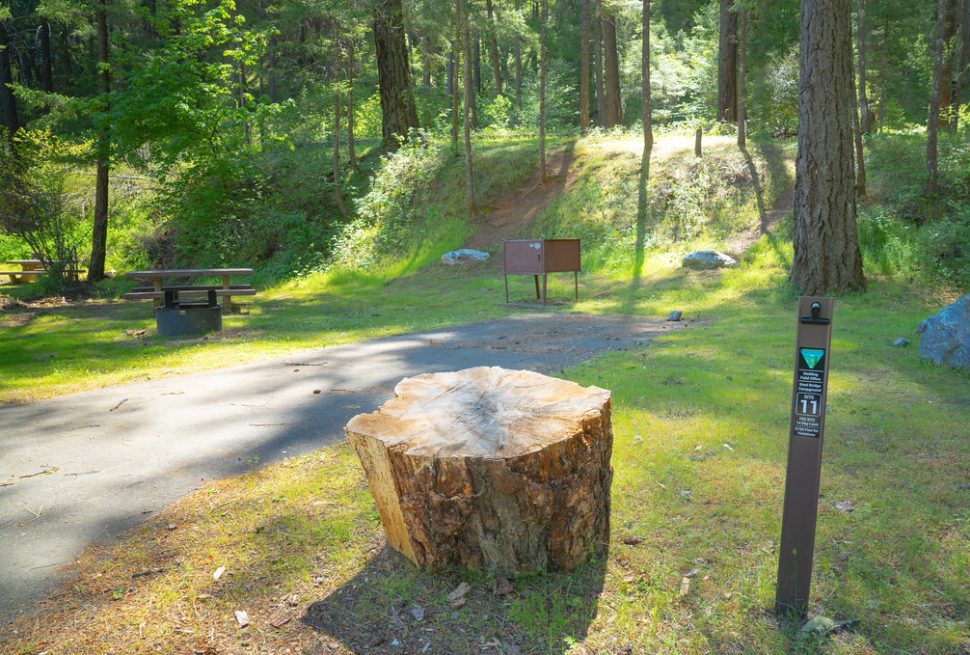
- Find a site that is genuinely open: no belongings in it and no receipt tab attached to the campsite post.
- Fill out a fee envelope from the campground information board. At Glacier, credit cards are accepted at all first-come, first-served campgrounds, and starting in 2025 the Cutbank Campground requires payment through the Scan & Pay feature in the Recreation.gov app.
- Remove the tear-off receipt and place it on the campsite post. That receipt is what tells other campers the site is taken.
- Drop the sealed envelope in the fee tube near the entrance within a half hour of picking your site.
Checkout times vary by campground; Glacier uses noon and asks campers staying another night to re-register by 11 a.m., while the Angeles National Forest uses 11 a.m. where fees are required. Ask about site limits too, since some forests cap sites at two tents, two vehicles and eight people.
Camp tip
A site with a receipt on the post is claimed, even if it looks empty. Gear left behind can mean the campers are hiking or fishing, and taking over an occupied site is a quick way to ruin someone’s trip.
Occupancy rules and stay limits
Two rules show up in nearly every forest. First, someone must occupy the site the first night after you set up. Second, you cannot leave camping equipment unattended for more than 24 hours without permission from a ranger.
Stay limits are set locally. Fourteen consecutive days is a common maximum in Forest Service campgrounds, and the Angeles National Forest also caps overnight stays at 21 days per year per national forest. Longer stays and different limits exist, so read the signs at the entrance and the fine print on the fee envelope.
Where fees apply, an America the Beautiful Senior or Access pass can knock 50 percent off the camping fee itself, as covered in our guide to park passes and camping fees.
Backup plans when everything is full
Even good timing sometimes loses to a full campground. Build a fallback into the trip:
- Nearby campgrounds. A second or third option within an hour’s drive turns a full lot into a detour instead of a disaster.
- Dispersed camping. Much national forest and BLM land allows free camping outside developed campgrounds, though the rules and stay limits are different. Read our guide to dispersed camping rules before you try it.
- Cancellations. If you would rather book ahead, reservable sites do open up when trips fall through, and some parks release sites on short rolling windows.
One thing that does not work in most parks is sleeping in your vehicle outside a registered campsite. Yosemite prohibits it outright, and the pattern is common. Know where you will sleep before the sites run out.
Camp notes
- Each park and forest sets its own camping rules: some campgrounds are fully reservable, some mix reserved and first-come sites, and some take no reservations at all.
- First-come, first-served campgrounds fill early on summer weekends and holidays, so arriving Friday morning or midweek gives you the best odds.
- At most self-service campgrounds you fill out a fee envelope, clip the tear-off receipt to the site post, and drop the envelope in the fee tube within about half an hour.
- Sites generally cannot be left unattended for more than 24 hours, and someone must occupy the site the first night after you set up.
- Stay limits vary by forest and campground, with 14 days a common maximum, so always check the local rules before settling in.
Questions campers ask
How do I know if a campground takes reservations?
Check the campground’s page on the park or forest website or search for it on Recreation.gov. If it appears on Recreation.gov, you can book it there; if the site says campsites are first-come, first-served, there is no reservation system to use.
How early should I arrive to get a first-come, first-served site?
On summer weekends and holidays, arrive as early in the morning as you can, because sites fill quickly and turnover happens at checkout time. Midweek arrivals are far easier than Friday afternoons.
How do I claim a site at a self-service campground?
Find a site with no receipt on the post and no belongings, fill out a fee envelope from the information board, put the tear-off receipt on the site post, and drop the envelope in the fee tube within about half an hour.
What happens if every campsite is full?
Have a backup plan before you leave home, such as dispersed camping on national forest or BLM land nearby or a different campground in the area. Do not sleep in your vehicle outside a campground, because many parks prohibit it.
Rules, fire restrictions and closures differ by park, forest and district and can change quickly. Check with the land manager before your trip. This guide is general information, not professional safety advice.