Two campgrounds can cost the same and feel nothing alike. Here is what to check on the campground page before you pay for a site.
Two campgrounds in the same park can charge the same nightly fee and still be nothing alike. One has shade, running water and a trailhead at the edge of the loop. The other is a sunny gravel pad a long drive from everything you came to see. The campground page on the park’s site tells you which one you’re booking, if you know which details to check before paying.
Reservation systems vs. first-come campgrounds
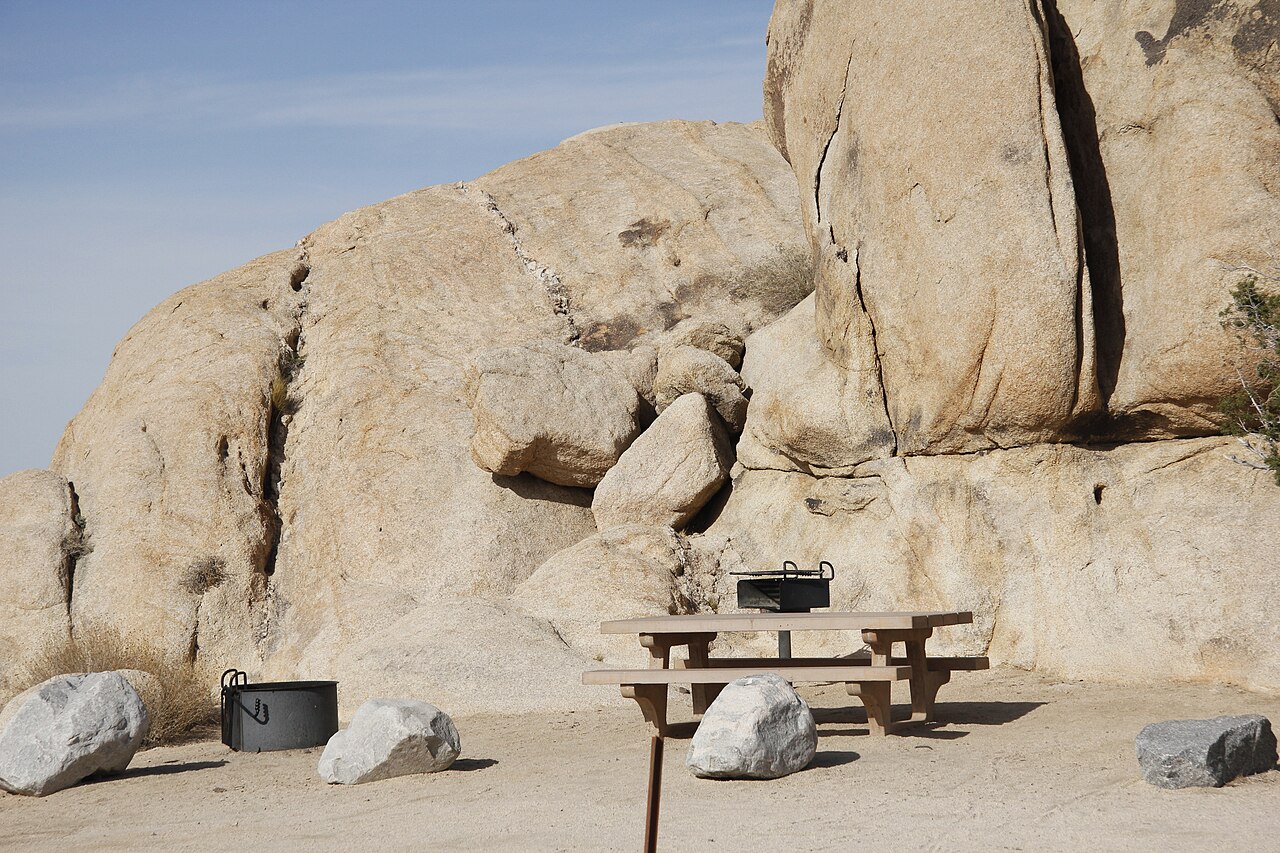
Start with how sites get claimed, because that shapes your arrival day. Most reservable national park campgrounds book through Recreation.gov, which handles reservations for more than 3,600 federal facilities and 103,000 individual sites. Some parks run a mix: Joshua Tree fills most of its campgrounds by reservation and keeps Hidden Valley, White Tank and Belle first-come, first-served.
Reservation windows matter as much as the system. Rocky Mountain’s campground reservations typically open several months in advance, so check the facility page for the exact window. Yosemite requires reservations for all its campgrounds from approximately April through October and warns that they are extremely difficult to get, though a few sites open two weeks ahead from around July to mid-October. Our guide to how campsite reservations work walks through the process.
First-come campgrounds reward early arrival above all. Joshua Tree’s first-come loops cost $25 a night, and you must occupy the site and pay within one hour of setting up. The park says those campgrounds are full nearly every weekend from September through May, typically by Friday afternoon. White Tank and Belle close for the summer; Hidden Valley stays open all year. If you’re counting on a first-come loop, our guide to how they work covers arrival timing and backup plans.
Vehicle and rig length limits
Length limits show up in two places: the campground and the road to it. Yosemite Valley caps RVs at 40 feet and trailers at 35 feet, but only eight sites that size exist there, six in Lower Pines and two in North Pines. Many more sites in the park take RVs up to 35 feet or trailers up to 24 feet.
Roads are often the stricter limit. On Sequoia’s Generals Highway, vehicles longer than 24 feet are not advised between the Foothills Visitor Center and Potwisha, vehicles longer than 22 feet are not advised on the stretch up to Giant Forest Museum, and single vehicles over 40 feet are prohibited on that same stretch. Yosemite’s Glacier Point Road allows single vehicles of only 30 feet beyond the Sentinel Dome/Taft Point trailhead, with no trailers. Mariposa Grove Road tops out at 21 feet, also with no trailers. Sequoia’s Mineral King campgrounds take no RVs or trailers at all.
| Where | Limit | What to know |
|---|---|---|
| Yosemite Valley campgrounds | 40 feet RVs, 35 feet trailers | Only 8 sites this size |
| Generals Highway, Sequoia | Not advised over 22 to 24 feet, by stretch | Single vehicles over 40 feet prohibited on one stretch |
| Glacier Point Road, Yosemite | 30 feet past a marked trailhead | No trailers beyond that point |
| Mariposa Grove Road, Yosemite | 21 feet | No trailers; park and ride the free shuttle |
Heads up
Length limits often count vehicle and trailer together. Measure your full rig from front bumper to rearmost point and compare it against both the site limit and the road limits on the way in.
Generator hours, quiet hours and campfire hours
Generator rules are park-specific and sometimes surprising. Yosemite allows generator use only from 7 to 9 am, noon to 2 pm and 5 to 7 pm, and not at other times. Other agencies differ: California State Parks allow generators from 10 am to 8 pm, and New York State Parks require combustion generators to follow posted generator hours. Never assume the rules from one campground carry to the next. Campfire hours can be narrow too: campfires in Yosemite Valley and Hodgdon Meadow campgrounds are allowed only from 5 pm to 10 pm, because smoke can pool near the ground under nighttime inversions. Our campfire guide covers restrictions and putting a fire out cold.
Water, dump stations and daily driving
Water and hookups vary more inside parks than almost anywhere else. Joshua Tree’s Black Rock and Cottonwood campgrounds each have water, flush toilets, tables, fire grates and a dump station; the park’s smaller campgrounds do not, so you carry what you need. Yosemite has no electrical, water or sewer hookups at any campground. Dump stations with fresh water sit at Upper Pines year-round and near Wawona in summer, while the Tuolumne Meadows dump station is closed until further notice for work on the wastewater plant. Equestrian travelers should note that Joshua Tree’s horse camps at Black Rock and Ryan require an actual horse to book, and Ryan closes in summer.
Then check the drives your plan depends on. Sequoia closes the Moro Rock and Crescent Meadow Road to private vehicles on summer weekends and holidays, with parking at Giant Forest Museum and a shuttle instead. Yosemite’s Hetch Hetchy Road takes vehicles only 25 feet long and 8 feet wide, and it is the park’s only road that isn’t open around the clock, running sunrise to sunset. If your day hinges on an early start or a late return, those details decide whether a campground works. Group sites differ as well: Indian Cove’s group campground in Joshua Tree takes small RVs or trailers up to a combined 25 feet, while Cottonwood and Sheep Pass group campgrounds are tent-only.
Season, elevation and site comfort
A campground that’s pleasant in one month can be a different place in another. Tioga Road in Yosemite closes from approximately November through May, and overnight parking is not permitted from October 15 until the road opens in spring. Joshua Tree’s busy spring runs from mid-February to mid-May, when even weeknights fill. Recreation.gov notes that shoulder-season trips take extra planning but offer fewer crowds and better odds on reservations.
Elevation shapes comfort too. Joshua Tree’s Black Rock sits at 4,000 feet and Cottonwood at 3,000 feet, and that difference shows up in evening temperatures. Read the elevation on the facility page and pack for it; nights at 4,000 feet do not feel like nights at 8,000 feet. Campground maps show loops and site numbers, not comfort, so look at site photos or descriptions for sun and wind exposure. An end-of-loop site often catches more wind; a site under trees stays cooler but can hold damp after rain. Think about when you’ll actually be at camp, midday heat or evening, and pick shade accordingly.
A pre-booking checklist
Run through this before you pay for a site:
- Reservation or first-come, plus the exact booking window
- Your measured rig length against both site limits and road limits
- Generator hours, if you bring one, and whether hookups exist at all
- Water on site or water you carry, and the dump station location
- Quiet hours, campfire hours and current fire restrictions
- Seasonal closures affecting roads or whole campgrounds
- Elevation and the weather that comes with it
- Fees and passes: interagency passes cover admission and/or amenity fees at more than 2,000 federal recreation locations, and the campground page lists what your site costs, which our guide to park passes and camping fees explains
- Choosing and Setting Up a Campsite: what to check after you’ve claimed the site, from overhead limbs to drainage and wind.
- Dispersed Camping on National Forest and BLM Land: when park campgrounds are full, nearby federal land is often the fallback. Know the basic rules first.
- Camping in Cold Weather: for high-elevation campgrounds and shoulder-season trips, staying warm matters as much as the booking.
Camp notes
- Reservable national park campgrounds book through Recreation.gov, which handles reservations for more than 3,600 federal facilities and 103,000 individual sites.
- Joshua Tree’s first-come campgrounds, $25 a night, fill nearly every weekend from September through May, usually by Friday afternoon.
- Yosemite Valley has only eight sites that fit a 40-foot RV or 35-foot trailer, so measure your whole rig before you book.
- Generator and campfire hours are park-specific: Yosemite allows generators only 7 to 9 am, noon to 2 pm and 5 to 7 pm.
- Check seasonal closures too; Yosemite’s Tioga Road closes roughly November through May, with no overnight parking from October 15 until it reopens.
Questions campers ask
Do all national park campgrounds take reservations?
No. Yosemite requires reservations for all its campgrounds from approximately April through October, while Joshua Tree keeps Hidden Valley, White Tank and Belle first-come, first-served. Check each park’s campground page before you plan an arrival day.
What happens if my RV is too long for a campground?
You can be denied at the site or blocked by a road limit before you reach it. Some roads also bar trailers outright, and in some places the limit counts vehicle and trailer combined, so check both campground and road rules.
How early should I book a popular park campground?
As early as the booking window allows. Rocky Mountain’s campground reservations typically open several months in advance, and Yosemite warns that its April-through-October reservations are extremely difficult to get. The facility page lists the exact window.
Does the America the Beautiful pass cover camping fees?
Recreation.gov says annual or lifetime interagency passes cover admission and/or amenity fees at more than 2,000 federal recreation locations. How a pass applies at a given campground is detailed on the facility page, so confirm there before you book.
Rules, fire restrictions and closures differ by park, forest and district and can change quickly. Check with the land manager before your trip. This guide is general information, not professional safety advice.