A plain-English rundown of the Junior Ranger program: what kids actually do, what it costs, and how to work a badge ceremony into your campground routine.
If your family camps in the national parks, you have probably seen kids proudly announcing that they just got sworn in. That is the Junior Ranger program, and it is one of the best free activities in the park system. Here is how it runs, what the badge actually requires, and how to fit it around a campsite schedule.
What a Junior Ranger program is
The National Park Service runs Junior Ranger programs at most of its more than 400 sites, from big-name parks to small historic monuments. The idea is simple: kids explore the park through structured activities, learn what makes that place special, and take a pledge to help protect it. The motto is “Explore, Learn, Protect.”
The program is built for kids and their families, but the Park Service welcomes people of all ages and abilities. It costs nothing to join.
Getting the booklet and what it asks
The routine is nearly the same everywhere. Check in at the visitor center, and in some parks at the entrance station, and ask whether they offer the program. A ranger or volunteer hands you a paper booklet and explains what your child needs to finish to earn the badge.
Two things worth doing before you arrive:
- Check the park’s own webpage, since each park describes its program there and some offer a downloadable version of the booklet.
- Some parks can provide Spanish-language materials; ask at the desk or email the park ahead of time.
Every park writes its own booklet, so the activities match the place. A park with famous fossils might ask kids to write a poem to a fossil. A coastal site might have them connect the dots of a whale skeleton. Common pages include matching games, drawing prompts, word searches, short writing exercises, and checklists such as learning Native names for plants.
Some programs add requirements beyond the booklet. At Yellowstone, earning the badge means attending a ranger-led program, hiking a park trail or boardwalk, and completing booklet activities. The ranger who hands it over will tell you how many pages are needed, and that number often depends on your child’s age.
Ages, timing, and the swearing-in
Most programs are designed for kids roughly ages 5 to 13, and national theme booklets often target ages 5 to 14, but there is no age limit in practice. Younger children can complete pages with a parent reading aloud, and adults can earn badges too, usually working from the booklet for the oldest age range. Some parks print “Senior Ranger” on that version, and the badge or patch can differ by age group.
Plan on an hour or two for a typical booklet, though it varies with age and park. At larger parks with trail and ranger-program requirements, it can stretch across a whole visit.
When the booklet is done, your child brings it back to the visitor center. A ranger or volunteer looks it over, often asks a few questions about what they saw, then reads the pledge. Your kid raises a hand, promises to stay safe, be a good role model, and keep learning about parks, and receives an official Junior Ranger badge or a similar keepsake.
One detail to plan around: most parks can only provide badges to in-person participants. If something goes wrong, a badge runs out, or you miss visitor center hours, contact the park directly through its National Park Service webpage.
Camp tip
Plan the swearing-in for your departure morning, not your arrival afternoon. Visitor centers close earlier than campgrounds.
Badges beyond the big parks
Alongside park-specific programs, many parks offer National Theme Junior Ranger booklets on topics that cross park boundaries. Examples include the Night Skies Explorer, the Junior Paleontologist, the Spaceflight Explorer, and a fishing booklet. Some have online activities or downloadable booklets, and awards vary: a printable certificate, a digital reward, or a physical patch or badge. Many physical awards are given out only in person, so check with the site before your visit.
A few programs work entirely by mail. Petrified Forest National Park, for example, lets you download its activity book, complete it, and mail it back for a badge. Some parks cannot mail physical badges because of shipping costs and send stickers instead.
Fitting it into a camping trip
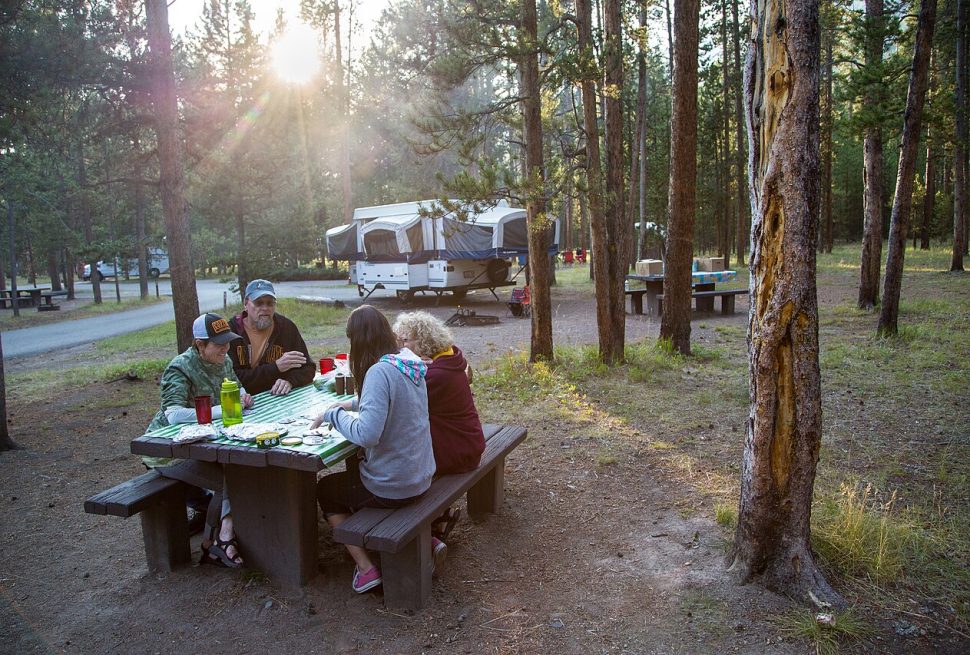
A worked example, for illustration. Say you book three nights at a park campground. On day two, stop at the visitor center on the way to a trailhead and pick up the booklet. Skim it over breakfast and circle pages that match your plans: the wildlife pages for your hike, the history pages for the ranger talk that afternoon. Fill in a few pages during quiet time at camp, and stop at the visitor center on your way out on day three for the pledge and the badge. Only two short desk visits get added to the schedule.
A few habits that keep it fun instead of a chore:
- Let the kid choose which pages to do first.
- Spread the booklet across the whole stay rather than treating it as homework.
- Pair activities with things already on your itinerary, like a hike or an evening ranger program.
- If bad weather blows in, booklet pages make a good tent-time activity. Our guide to thunderstorms at camp covers what to do while you wait.
The program also pairs with the ethics the badge teaches. Practicing the ideas in Leave No Trace at camp shows kids that the pledge is more than words. If the dog is along, our guide to camping with your dog explains where pets can and cannot go in the parks.
- How Campsite Reservations Work on Recreation.gov: Book the campground first, then plan your Junior Ranger stops around it.
- National Park Campgrounds: What to Check Before You Book: What to look for when choosing a campground near the visitor center where you will pick up the booklet.
- Leave No Trace at Camp: The Seven Principles in Practice: The habits behind the Junior Ranger pledge, applied at your own site.
Camp notes
- Junior Ranger programs run at most of the more than 400 National Park Service sites, and the standard program is free with a booklet from the visitor center.
- Programs are designed for kids roughly ages 5 to 13, but there is no age limit and adults can earn badges too.
- Kids complete park-specific activities, return the booklet, take a pledge, and receive a badge or similar keepsake.
- Most parks hand out badges only in person, so plan to finish before you leave the park.
- National theme booklets, such as Night Skies Explorer and Junior Paleontologist, let kids earn additional awards, sometimes online or from home.
Questions campers ask
How much does the Junior Ranger program cost?
The standard program at National Park Service sites is free, including the booklet and the badge. Some parks offer downloadable booklets you can print before your visit, which shifts the paper and ink cost to you.
Can adults become Junior Rangers?
Yes. The program is designed for kids and families, but the National Park Service welcomes people of all ages and abilities. Adults are usually given the booklet for the oldest age range, and some parks call that version a Senior Ranger booklet.
What if my child loses a badge or we run out of time at the park?
Most parks can only provide badges to in-person participants, so try to finish before leaving. If a badge was lost, the park ran out, or you missed visitor center hours, contact that park directly through its page on the National Park Service website.
Is the program the same at every park?
No. Each park writes its own booklet and sets its own requirements, which may be printed in the booklet or explained by the ranger who hands it to you. Check the park’s webpage or call ahead to confirm what is offered.
Rules, fire restrictions and closures differ by park, forest and district and can change quickly. Check with the land manager before your trip. This guide is general information, not professional safety advice.