The unwritten rules of the trail are simple once someone explains them. Here is who yields to whom, how to pass without awkwardness, and how to share the trail with bikers, horses, dogs and everyone else.
Every trail has rules on a sign and rules that never made it onto one. The posted ones tell you which uses are allowed and where. The unwritten ones cover how hikers, bikers and horseback riders share a narrow strip of dirt without colliding, spooking animals or trampling the plants along the edges. Learn them once and every hike gets easier, because you stop guessing at junctions, blind corners and passing moves.
Who Yields to Whom on a Trail
The National Park Service sums up trail courtesy with a version of the golden rule: give other visitors the same courtesy you hope to receive. Everything below is that idea, broken into situations you will actually run into.
Right of way simply means who goes first when two users meet. Yielding means stepping aside and letting the other person pass, the way you would wait your turn at a narrow driveway. Different user groups yield to each other in a set order, and signs at the trailhead usually spell it out for that specific trail. Where signs are missing, the general guidelines are consistent across national parks and national forests:
- Anyone on foot gives way to horses, mules and other pack animals.
- Bicyclists yield to hikers and to horses.
- Horses and their riders yield to no one, and riders are responsible for keeping the animal under control at all times.
National forests use the shorthand “Wheels Yield to Heels” for this: bikes and e-bikes yield to everyone on foot, and hikers yield to horseback riders. On some forest trails, ATVs and other motorized users share the tread, and the same order applies.
Hikers meeting other hikers is the case beginners find least obvious. The rule of thumb is that the hiker heading downhill yields to the one climbing up. It makes sense once you picture it. The person descending can see farther down the trail and has an easier time spotting a good place to step off, and the person climbing is working hard and does not want to lose their rhythm. That said, uphill hikers sometimes welcome the excuse to catch their breath and will wave you through. Either way, let the person heading up make the call.
One more wrinkle: none of these guidelines are worth getting hurt over. If you have nowhere to yield, or a simple word with the other party solves the problem, communicate and work it out. Courtesy beats technicalities.
Passing and Being Passed Without Awkwardness
Most trail friction comes from passing, not from right of way. A few habits fix nearly all of it.
When you approach someone from behind, call out in an easy, friendly voice and say you would like to get by. A simple “hi there, coming past on your left when you’re ready” does the job. On shared trails, a clear warning call is standard practice, and “on your left” tells the person ahead exactly which side you will use. Look ahead and behind as you pass, and move fully off the tread only where you can do so without stomping vegetation.
When someone announces a pass on you, keep to the right if the trail allows it, or step aside at the next durable spot, a rock, a wide shoulder of gravel, a log. A head nod or a hello as people go by keeps the whole thing friendly, and it also lets horses and their riders know exactly where you are.
Camp tip
If you cannot step off the trail without trampling plants, it is fine to stand still against the uphill edge and let people squeeze by. Saying “no rush, come on past” takes the pressure off both sides.
Hiking With a Dog: Leashes and Trail Rules
Dogs are welcome on many trails and banned on many others, and the rules change at every boundary. Some parks only allow pets on paved surfaces, roads and campgrounds. Bryce Canyon National Park, for example, keeps pets to pavement, the shared-use path and a short paved section of the Rim Trail, and requires leashes of six feet or less. Forest rules differ from park rules, and they can differ from one forest to the next, so check the specific site before you load the dog into the car.
Wherever dogs are allowed, the expectations are the same:
- Keep your dog under your control at all times, on a leash unless the site says otherwise.
- Pick up and pack out the waste, every time. A bag left beside the trail for later is still litter, and it is one of the most common etiquette failures on popular trails.
- Step off the trail together when yielding, so a loose leash or a friendly lunge does not put a dog in the path of a bike or a horse.
Horses and unfamiliar dogs are a bad mix. When you meet stock on the trail, shorten the leash, move to the downhill side and keep your dog quiet until they pass. For the bigger picture on pets and public land, our guide to camping with your dog covers leash rules and where dogs can and cannot go.
One seasonal note from the national forests: in hunting season, wear at least one piece of hunter orange that can be seen from any direction, such as a hat, vest or jacket, and put orange on your pack too. Dogs should wear orange or another bright color, whether that is a vest, a coat or a bandana.
Groups, Pace and Letting Faster Hikers By
Hiking with friends changes the math. A group of six fills a narrow trail, and stepping aside for others takes longer, so build a few habits into the outing.
Walk single file on narrow or muddy tread, and keep right where the trail is wide. Traditionally, groups yield to solo hikers and smaller parties, though plenty of solo hikers find it easier to slip past a group standing still than to make a large group shuffle off trail. Communicate, and whoever has the easier move makes it.
Match the pace to the slowest person in the group and pick a trail everyone can finish safely. That is as much a safety habit as a courtesy one, since it keeps your party together and keeps faster hikers from stacking up behind you. When someone comes up from behind asking to pass, gather your group at the next wide or durable spot, let them by, and wait a minute or two before starting again so nobody has to repeat the request.
Breaks belong off the trail. Resting in the middle of the tread at a viewpoint forces every later arrival to walk around you, usually through the plants you are trying to protect.
Staying on the Trail, Even When It’s Muddy
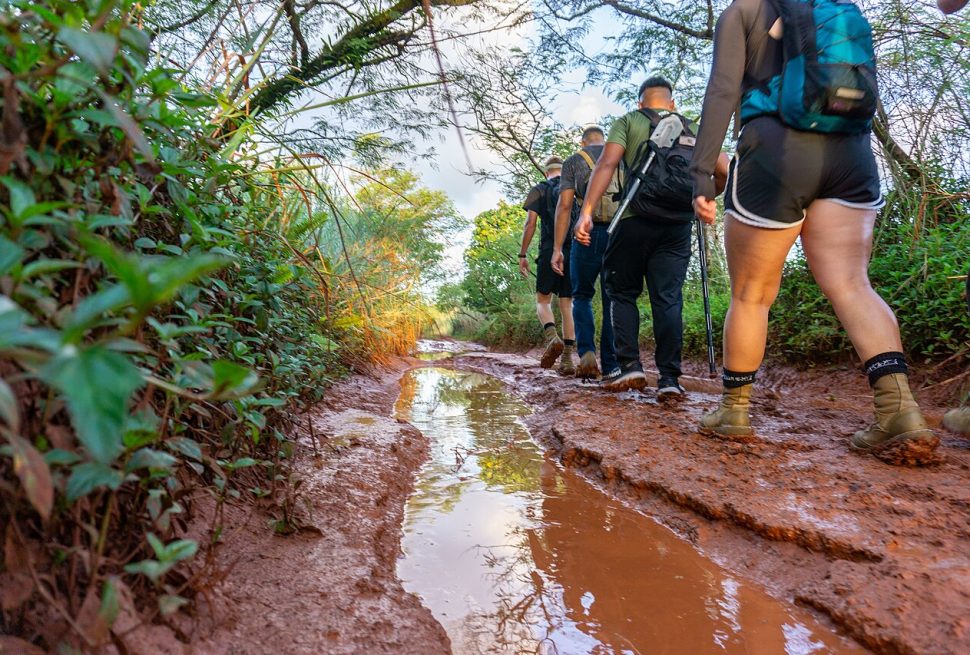
Staying on the trail sounds obvious until the trail turns to soup. The rule holds anyway: do not step off unless you absolutely must when yielding, and never to skirt a puddle or a mud hole. Walking the margins kills plants along the edge, and those bare strips widen into unofficial paths. Rangers call these “social trails,” and parks flag them as a real problem, because they contribute to plant death, aggressive erosion and more encounters between visitors and wildlife, rattlesnakes included.
Cutting switchbacks falls in the same category. The zigzags exist to slow water down and keep it from carving the hillside, so a shortcut that saves thirty seconds costs the slope a channel for every rainstorm that follows.
When the trail is too wet and muddy, the National Park Service advice is blunt: turn around and try again on a drier day. If the mud is patchy, walk straight through it rather than around it. Boots dry overnight; a trampled meadow takes seasons. The same thinking applies at camp, where our guide to Leave No Trace principles at camp walks through the rest of the framework, from packing out trash to leaving rocks and plants where you found them.
Noise, Music and Why Quiet Matters
Quiet is a shared resource on the trail, and it matters to more than just other hikers. Wildlife needs its space, and loud noise pushes animals farther from the trail and closer to trouble. Parks ask visitors to keep noise levels low and to refrain from playing music out loud, and that guidance shows up on national forest land too.
Conversation at a normal volume is fine. So is the greeting you offer when you pass people, which the Park Service encourages, because a friendly hello sets the tone and lets anyone who has not spotted you, human or animal, know you are there. What to skip is the speaker: use earbuds or headphones and keep the soundscape intact for everyone else. Around horses, quiet matters even more, because sudden noises can spook an animal that outweighs everyone on the trail.
Keep your distance from any wildlife you see, never leave the trail for a closer look, and check park regulations before your visit, since some parks set minimum distances for specific animals.
Trailheads: Parking, Signs and Packing Out
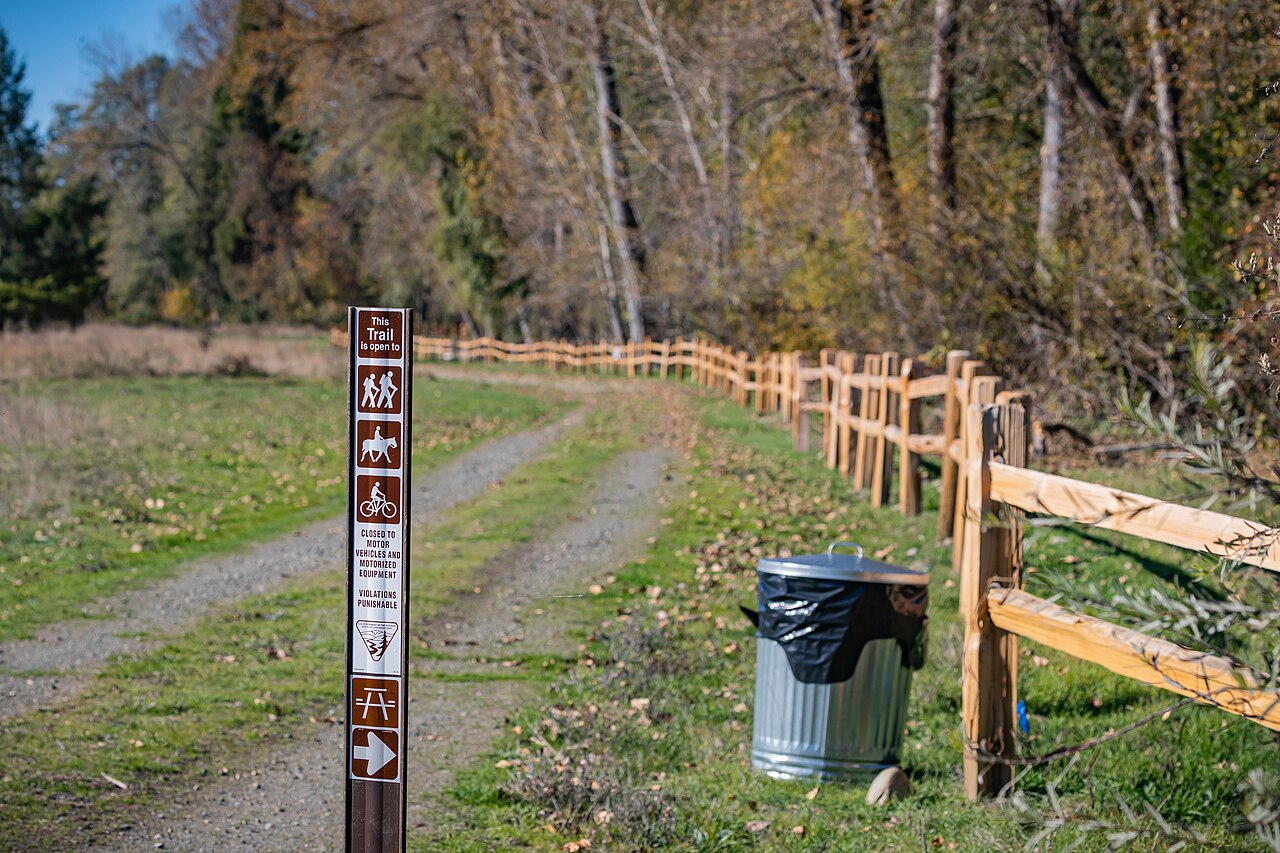
Etiquette starts before your boots hit the dirt. Trailhead kiosks and signs tell you which uses are allowed on that trail, whether pets can come along and any special restrictions in place. Obey all posted signs, and read them every time, because the rules for one trailhead down the road may not apply here. Use the provided parking lot rather than squeezing onto vegetation at the edges; at some parks, like Bryce Canyon, vehicles parked outside the provided lots can be towed.
The same respect carries through the hike. Whatever you carry in, carry out, including food scraps, orange peels and those dog waste bags. If nature calls far from a restroom, the Leave No Trace standard is to dig a hole 6 to 8 inches deep, at least 200 feet from any water source, campsite or trail, then cover and disguise it when you are done.
Before you leave home, a few minutes of planning covers the rest. Pick a trail that fits your experience and fitness, and check the park website or ask a ranger if you are unsure about difficulty. Leave a trip plan with a trusted friend who is staying behind, including where you are going, who is with you and when you plan to return, because that information is what search and rescue teams need if something goes wrong. Do not count on your phone, since many parks have little or no cell coverage, and hunting for a signal drains the battery fast.
A Small First Step
If all of this feels like a lot, start with the smallest piece: on your next hike, greet everyone you pass and let uphill hikers have the right of way. Those two habits, repeated on every trail, cover most of what etiquette is for.
- Finding new hiking trails near you: seven ways to scout out a new trailhead, including how to check its rules before you drive there.
- Camping with your dog: where pets can go on public land and the leash rules that apply at campgrounds.
- Leave No Trace principles at camp: the framework behind staying on durable surfaces and packing out everything you carry in.
Camp notes
- Hikers heading uphill have the right of way, so hikers going downhill step aside to let them pass.
- On shared trails, bikes yield to hikers, and both hikers and bikes yield to horses and pack stock.
- When you meet horses, step to the downhill side of the trail, stay calm and let the riders call the shots.
- Keep dogs leashed and under control, pack out their waste, and check the rules, since where pets are allowed varies by park and forest.
- Stay on the trail even when it is muddy, and if it is too wet to walk without damage, turn around and come another day.
Questions campers ask
Who has the right of way on a hiking trail?
People on foot give way to horses and other pack animals, and bicyclists give way to both hikers and stock. When two hikers meet, the one heading downhill steps aside for the one climbing up.
How long should a dog leash be on the trail?
Rules vary by park and forest, so check before you go. Some parks, including Bryce Canyon National Park, require leashes of six feet or less, and many trails do not allow dogs at all.
Is it okay to play music on a speaker while hiking?
No. Keep noise levels low and skip the speaker. Announce yourself with a greeting instead, which helps you pass other people and keeps wildlife from being startled.
What should I do if a trail is muddy?
Walk through the mud on the trail rather than widening it by stepping into plants. If the trail is too wet, the National Park Service suggests turning around and coming back on a drier day.
Rules, fire restrictions and closures differ by park, forest and district and can change quickly. Check with the land manager before your trip. This guide is general information, not professional safety advice.