Plenty of good first trips never happen because of beliefs that fall apart under two minutes of checking. Here are the myths, and what the agencies actually say.
Plenty of parents like the idea of camping, then talk themselves out of it. The reasons are usually the same ones: gear lists that look expensive, bug spray warnings, campfires with toddlers nearby, and a feeling that the first trip has to be a big production. Most of those worries fall apart under two minutes of checking. Here is what the agencies actually say, one myth at a time.
Myth: Kids Need a Truckload of Special Gear
Children do not need child-sized versions of everything adults carry. A family tent, warm bedding, a flashlight per kid, and clothes that can get muddy cover most of it. The things that actually decide whether a first trip goes well, like a site picked ahead of time and a loose schedule, cost nothing at all.
If budget is the sticking point, the real cost of a starter kit is lower than most parents expect, and much of it gets reused for years. Our starter camping kit cost breakdown shows where the money goes and where you can skip. When it is time to pack, the first campout checklist for parents walks through what to bring and what to leave home.
Myth: Bug Spray Is Too Harsh for Children
This one keeps families home during mosquito season, and it runs opposite to the evidence. The CDC and EPA both recommend EPA-registered insect repellents, and when used as directed, these products are proven safe and effective, even for pregnant and breastfeeding women. After a full safety review, the EPA concluded that DEET repellents used the way the label directs raise no health concerns for the general public, kids included. CDC guidance allows DEET on children, including infants older than 2 months.
What matters is applying it correctly:
- Look for the EPA registration number on the label, which shows the maker submitted effectiveness data.
- Higher DEET concentrations protect longer, but above 50% they add nothing, so there is no reason to buy the strongest bottle. The American Academy of Pediatrics suggests a child’s repellent contain no more than 30% DEET, applied at most once a day.
- Do not use products with oil of lemon eucalyptus (OLE) or PMD on children under 3.
- Spray repellent onto your own hands first, then apply it to a child’s face. Keep it off hands, eyes, mouth, cuts, and irritated skin.
- Apply sunscreen first, repellent second.
- Children under 10 should not apply repellent themselves.
- Wash skin with soap and water once you are back indoors.
Products without EPA registration are the bigger unknown, not the smaller one; the CDC notes the effectiveness of some natural repellents is not established. For added protection, the CDC recommends treating clothing and gear with 0.5% permethrin, which kills and repels mosquitoes and ticks.
Myth: Campfires Are Off-Limits With Little Kids
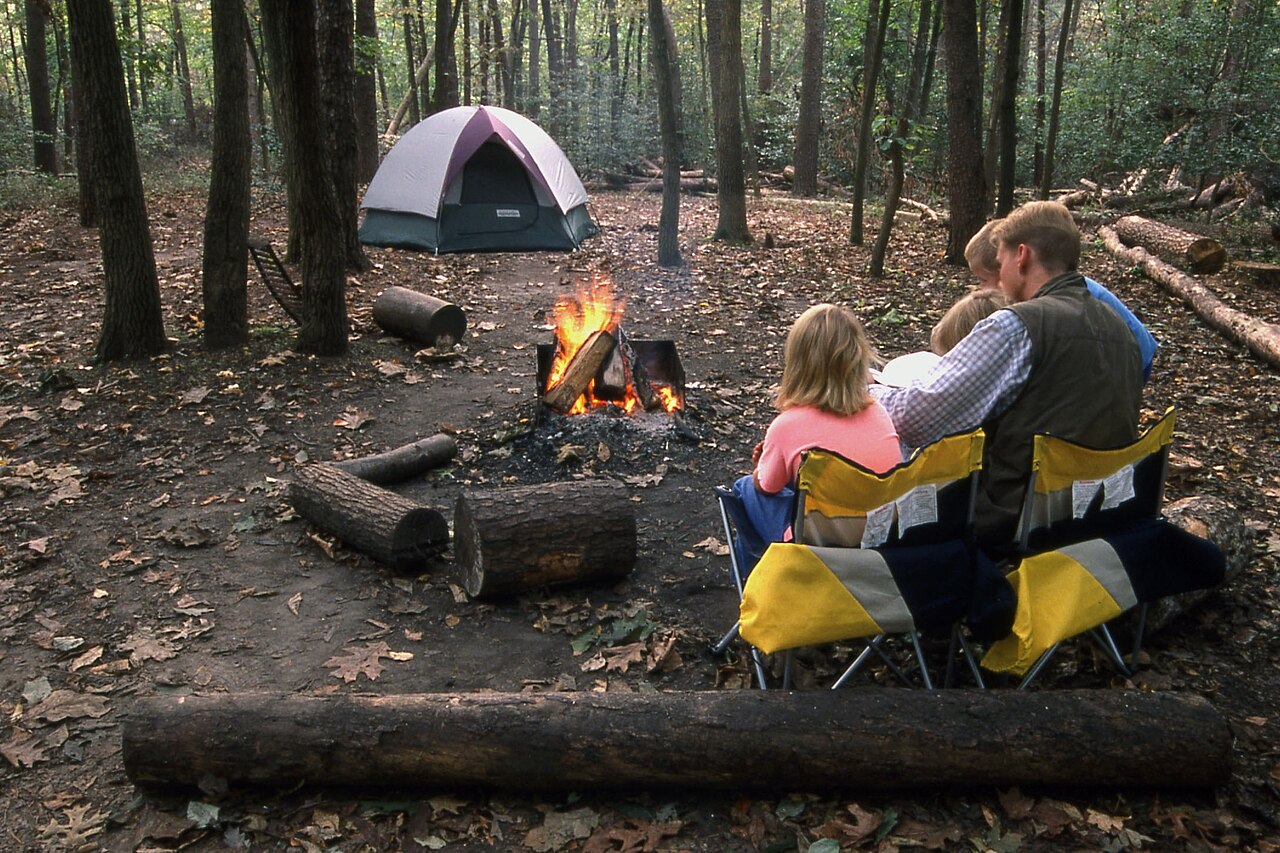
Fires and young children can mix, with structure. Per Smokey Bear, nearly 9 out of 10 wildfires in the United States are caused by people who are careless or do not know how to be safe outdoors. Teaching kids fire rules early is prevention, not risk-taking.
The mechanics are simple enough for a young kid to learn:
- Put the pit downwind of your tent and gear, in a spot protected from wind gusts.
- Clear a 10-foot-diameter area around it, with no branches overhead, and use an existing fire ring or circle it with rocks.
- Keep the fire small, and never leave it unattended, especially at bedtime.
- Put it out cold: drown the embers with water, stir everything with a shovel, then test with the back of your hand.
One planning step trips up more families than supervision does. Fire restrictions and closures vary by forest and park, and some campgrounds ban wood fires during dry conditions even when stoves are still allowed. Check the rules before you drive out and plan a dinner that works either way. Our guide to campfire rules and safety covers restrictions, firewood, and putting a fire out cold.
Camp tip
Give each child the cold-out test as their official job. Checking stirred ashes with the back of a hand is a task kids take seriously, and it builds the habit of never leaving a warm fire behind.
Myth: First Trips Have to Be Epic to Count
One night at a campground an hour from home counts as camping. Some of the best first trips are deliberately small: a drive-in site with bathrooms nearby, food your family already likes, and one short walk. Skip the long drive, the backcountry permit, and the summit push for now.
National parks make easy first trips easier than parents assume. Many park campgrounds sit near paved loops and visitor centers, and the Junior Ranger program gives kids a goal for the stay. A badge earned on an overnight trip counts exactly as much as one earned on a two-week vacation. Our walkthrough of how Junior Ranger programs work explains the booklets and the swearing-in.
Myth: Picky Eaters Can’t Camp
Camping hands you more control over food, not less. You choose every item in the cooler, so nothing at camp has to be a surprise. Pack foods your kids already eat at home, give them safe jobs like wrapping foil packets, and let the campfire do some of the persuading. S’mores have started more outdoor enthusiasm than any brochure.
Two habits help: bring more snacks than seems reasonable, and treat dinner as flexible. A kid who eats granola bars and hot dogs by the fire for two nights has camped successfully.
Myth: A Bad Night of Sleep Ruins the Whole Trip
The first night is usually the rough one. Strange sounds, sleeping bags that feel nothing like beds, and a very early wake-up are normal, not signs of failure. Plan a low-effort second day and the rough night becomes a story instead of a dealbreaker.
Cold is the most common culprit, and it is a planning problem rather than luck. Dress kids in layers, put dry socks on before bed, and check the overnight low before you book the site. A bad night rarely stops kids from asking to go back; it stops parents from offering. Give yourself permission to try again.
Facts Worth Planning Around
A few things hold no matter which myth you are fighting:
- Bug bite prevention is about health, not just comfort. Mosquito and tick bites can spread diseases such as West Nile virus and Lyme disease, which is why the CDC treats repellent as standard equipment.
- People cause the overwhelming majority of wildfires, and most of those fires are accidental and come from careless acts. A fire that is out cold before bed or before you leave is the single habit that matters most.
- Campground rules differ. Some sites take reservations, some are first-come, first-served, and fire rules change with conditions. Check the specific forest or park before you go, because the honest answer to most “is this allowed” questions is that it depends on where you are standing.
None of this takes expert-level skill. It takes a checklist, a bottle of EPA-registered repellent used as directed, and a fire you put out cold. That combination is enough to get a hesitant family to a campsite and back home already planning the next trip.
- How Campsite Reservations Work on Recreation.gov: How booking works, since a reserved site removes the biggest unknown from a first family trip.
- Leave No Trace at Camp: The Seven Principles in Practice: Simple habits kids can follow, which pair well with the Junior Ranger pledge.
- Camping With Your Dog on Public Lands: Leash Rules and Where Dogs Can Go: The rules for the other family member with opinions about the trip.
Camp notes
- EPA-registered insect repellents, including DEET, are considered safe for children when used as directed; the AAP suggests no more than 30% DEET for kids.
- Do not use products with oil of lemon eucalyptus or PMD on children under 3, and apply repellent to a child’s face with your hands, never a spray.
- Campfires work with kids when the pit has a 10-foot cleared area, the fire is small, and it is drowned, stirred and cold-tested before bed.
- Nearly 9 out of 10 US wildfires are caused by people, so teaching children fire rules early is prevention, not risk-taking.
- First trips count even when they are one night at a drive-in campground an hour from home.
Questions campers ask
What insect repellent is safe for young children?
Look for an EPA-registered product and the EPA Reg. No. on the label. DEET is allowed on children, including infants older than 2 months, but skip products with oil of lemon eucalyptus or PMD on children under 3.
How much DEET should a child’s repellent contain?
The American Academy of Pediatrics suggests no more than 30% DEET, applied at most once a day. Concentrations above 50% offer no added protection for anyone.
Can young kids be around a campfire?
Yes, with structure: a pit downwind of tents with a 10-foot cleared area, a small fire, constant supervision, and an out-cold routine of drown, stir and back-of-hand test before sleep or departure.
How long should a first family camping trip be?
One night is enough. A drive-in campground with bathrooms, familiar food and one short walk builds the routine without the logistics of a long trip.
Rules, fire restrictions and closures differ by park, forest and district and can change quickly. Check with the land manager before your trip. This guide is general information, not professional safety advice.