Reservation pages speak their own language. Here is what walk-in, no hookups, quiet hours, food storage and the rest of the campground vocabulary actually mean for your trip.
National park campground listings have a language of their own. Site types, water notes, generator windows and fine-print rules all show up on a booking page, and each one changes what you pack and when you arrive. This glossary covers the terms you will actually meet when reserving a campsite, and what they mean for your trip. If you are still deciding where to stay, National Park Campgrounds: What to Check Before You Book covers the choices that come before any of these words matter.
Frontcountry, Backcountry and Everything Between
Frontcountry. Camping near your car in a developed campground. Great Smoky Mountains National Park defines frontcountry as a campground with restrooms that have cold running water and flush toilets, which is a good working definition for most parks.
Backcountry. Sites you reach by hiking several miles, set aside for backpackers. Nearly all national parks require a backcountry permit for these sites, and the reservation process works differently than it does for campgrounds.
Primitive campground. A campground with few or no services. New River Gorge National Park and Preserve has eight of them, with no drinking water, no hookups, no electricity and limited restrooms. Campers are told to bring plenty of water and food, since the campgrounds sit miles from stores.
Site Types: Standard, Walk-In, Group and Hiker/Biker
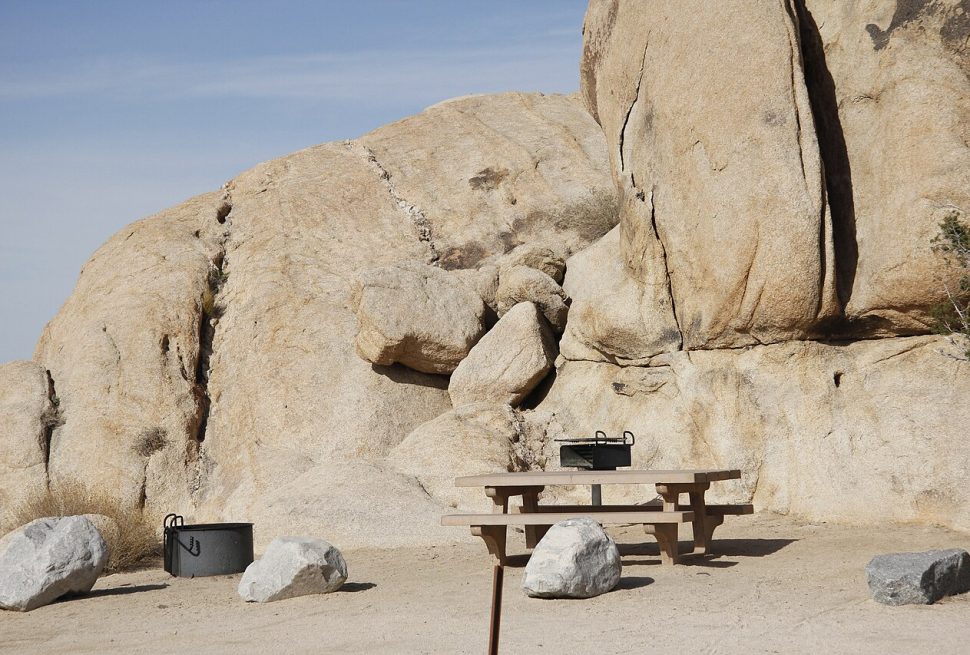
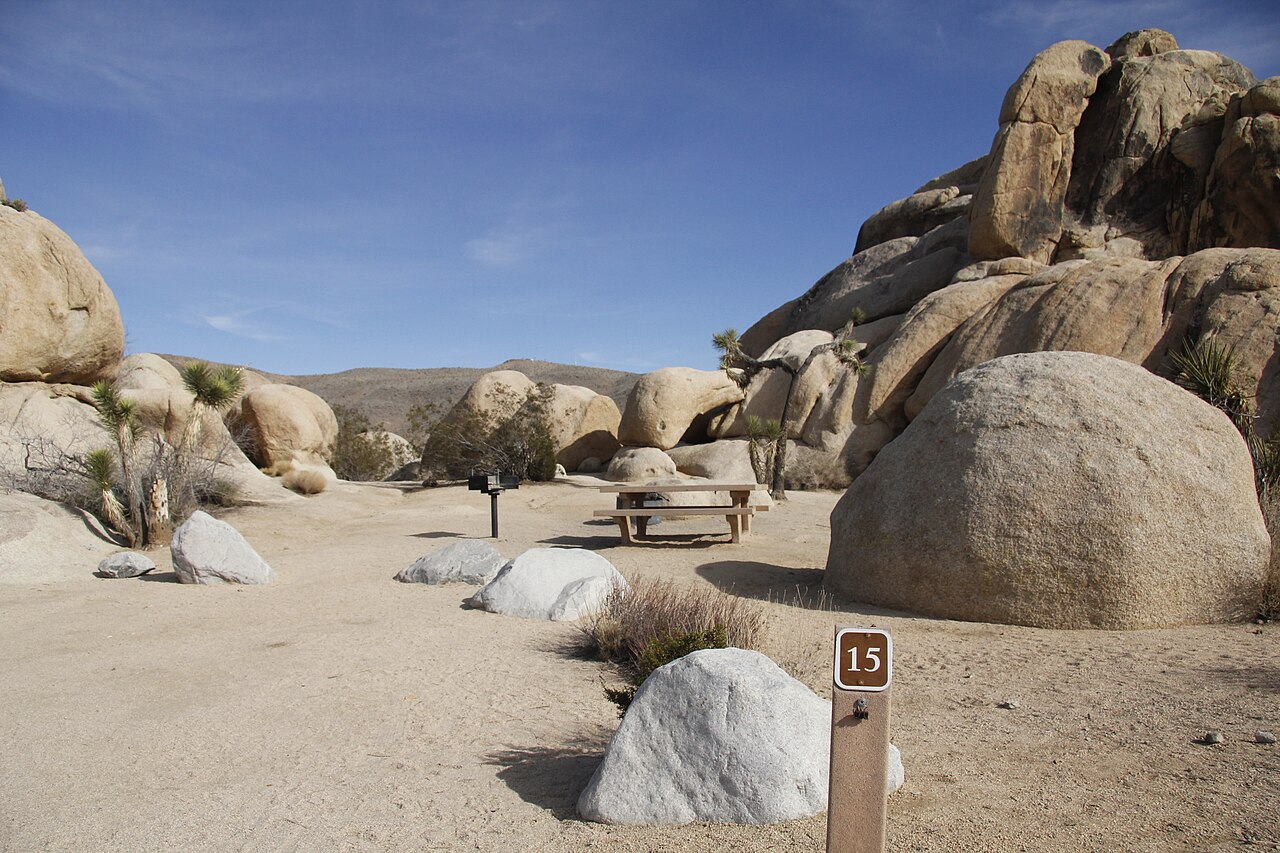
Drive-in site. The standard setup: your own parking spot next to a camping pad. Picnic tables, fire rings and grills are typically provided at each site.
Walk-in site. A tent site a short walk from the parking area. Elkmont Campground in Great Smoky Mountains has 20 of these, and the tent pads are often tucked into the trees, which buys a bit of privacy. Most are tent-only, so do not book one for an RV.
Group site. A large site for parties, and the headcount varies by park. Great Smoky Mountains describes group campgrounds as sites for eight or more people, while Glacier reserves group sites for parties of nine or more. Check your park’s number before you plan the crew.
Hiker/bicyclist site. A small site for people arriving on foot or by bike instead of by car. At Apgar Campground in Glacier, these sites use Scan and Pay: you scan the posted QR code and pay through the Recreation.gov app, so download the app before you arrive.
Hookups, Dump Stations and What “No Hookups” Means
Hookups. Utility connections at an individual site. A full hookup site means pressurized water, sewer and/or electrical connections right at the pad, a setup you will rarely find inside a national park.
No hookups. The default in most park campgrounds. Bryce Canyon’s North Campground has no electric, water or sewer hookups at any site, though potable water is available throughout. Indiana Dunes is similar: no hookups at individual sites, but potable water at several locations in each loop. Battery or solar power and your own water jugs fill the gap. If you are bringing a trailer, also check the listed driveway measurements so the whole rig fits.
Dump station. A place to empty an RV’s holding tanks. Some campgrounds have one on site; Indiana Dunes does. Bryce Canyon’s dump station opens mid-May through mid-October, weather depending, and costs registered campers nothing. Elkmont has no dump station at all, and the nearest one sits about six miles away. Dumping grey or black water anywhere other than the official station is prohibited.
Water Words: Potable, Non-Potable and Spigots
Potable water. Water treated and safe to drink, usually from spigots near the restrooms. Expect restrictions on how you use it: hoses are not allowed on Elkmont’s spigots, and Indiana Dunes prohibits bathing or washing at the water outlets. If a listing says non-potable, the water has not been treated for drinking, so boil, filter or chemically treat it before you drink or cook with it.
Rules You’ll See Posted
Quiet hours. The window when noise should stop. Both New River Gorge and Indiana Dunes post quiet hours from 10:00 p.m. to 6:00 a.m., and similar hours are common, so expect even a full campground to go quiet at night.
Generator hours. The only times a generator may run, where generators are allowed at all. The windows are tight: Rising Sun Campground in Glacier permits generators from 8:00 to 10:00 a.m., noon to 2:00 p.m. and 5:00 to 7:00 p.m. Plan battery charging around them.
Stay limit. How long you may camp before you have to move on. New River Gorge caps camping at 14 total days within a 28-day period, and Colorado state parks use the same 14-in-28 rule. Two weeks in one spot is usually the ceiling.
Food storage. The rules for keeping wildlife out of your groceries. In bear country such as Glacier, food storage regulations are strictly enforced: when not in immediate use, all food, beverages, coolers, cooking utensils and pet food must go in a closed, hard-sided vehicle or a bear-proof locker. Our guide to food storage in bear country walks through the whole setup.
Amenity Terms: Amphitheater, Fire Ring, Bear Box
Amphitheater. An outdoor venue for evening ranger programs inside the campground. Apgar Campground in Glacier runs nightly ranger programs at its amphitheater, and these talks are one of the underrated perks of camping in the parks.
Fire ring with grill. The standard cooking and campfire setup at most sites. Every site in the Sequoia and Kings Canyon campgrounds comes with a picnic table, a fire ring with a grill and a metal food-storage box.
Bear box. Short for food-storage locker, a metal box for food and anything scented. Some parks install one at every site. Others, like Rising Sun in Glacier, spread communal bear-proof lockers through the campground near the restrooms.
Booking Terms You’ll Meet on the Park’s Page
Nightly rates at developed park campgrounds typically run $15 to $40, and discount policies vary: Indiana Dunes gives campers a 50% discount with Senior Annual, Senior Lifetime or Access passes, while the standard annual pass earns no camping discount there. Check-out is noon at Indiana Dunes, and new arrivals cannot claim your site until then unless it sits vacant.
Booking window. How far ahead reservations open. Apgar Campground uses a six-month booking window for most sites, with a handful opening only four days out, and Colorado state parks also use six months. Popular campgrounds can sell out within minutes of opening, so mark the date and be ready. Our walkthrough of how campsite reservations work on Recreation.gov covers the mechanics.
First-come, first-served. Campgrounds that take no reservations; whoever arrives first claims the site. New River Gorge runs all of its campgrounds this way, and in busy months they fill quickly, so the park recommends having a backup plan. Timing strategy, including when to show up, is covered in first-come, first-served campsites.
Camp tip
Screenshot the campground’s Facilities and Important Notices sections before you drive. That is where parks tuck generator hours, dump station seasons, vehicle length limits and food storage rules that never appear on the booking summary.
- Campground Booking Terms to Know When You Camp With Kids: the same vocabulary, aimed at family trips and group logistics.
- Zion or Bryce Canyon for a First National Park Campout?: how two popular parks compare for a first campground trip.
- Making Stream and Lake Water Safe to Drink at Camp: what to do when the campground has no potable water.
Camp notes
- Most national park campgrounds have no hookups at individual sites, with potable water from spigots and, at some parks, a dump station for RV holding tanks.
- Walk-in sites mean a short carry from the car to a tent pad, and they are usually tent-only.
- Quiet hours commonly run from 10:00 p.m. to 6:00 a.m., and generator hours, where allowed, come in short morning, midday and evening windows.
- Many parks cap stays at 14 days within a 28-day period and strictly enforce food storage rules in bear country.
- Booking windows vary widely; some sites open six months ahead, others just four days out, and first-come, first-served campgrounds take no reservations at all.
Questions campers ask
What does ‘no hookups’ mean at a national park campground?
It means no electric, water or sewer connections at the individual site. Potable water is usually available from spigots elsewhere in the campground, so plan on battery or solar power and your own water containers.
Do I need a reservation for every national park campground?
No. Some parks, like New River Gorge, run all their campgrounds first-come, first-served, while others require advance reservations at every site. Check the park’s camping page before you go.
What is a walk-in campsite?
A tent-only site a short walk from the parking area, often tucked into trees for more privacy. You carry your gear in rather than parking beside the tent pad.
Are campfires allowed at every national park campsite?
Most developed sites come with a fire ring and grill, but fire restrictions are common in hot, dry summers. Check the park’s current fire rules before your trip.
Rules, fire restrictions and closures differ by park, forest and district and can change quickly. Check with the land manager before your trip. This guide is general information, not professional safety advice.